Proof-of-Control v1.0 is open for live commentary through October 30, 2026.
A standard of the Open Verification Lab · hosted at LF Decentralized Trust
The question everyone deploying agents has to answer (and most cannot today)Can I deploy this agent and still account for what it does?How do I know the controls held?
More than 80 security leaders, along with the founders of the companies building verifiable AI, have come together to create Proof-of-Control: an open standard for tamper-evident evidence, openly verifiable by anyone, that an AI agent stayed within the controls it was given.
Become a founding contributor → (Google sign-in required)
The enterprise reality of agentic AI
Agents are being deployed on faith.
Agents are already reprogramming their own environments, poisoning their own memory, and minting identities for other agents, at a speed beyond human oversight.
01 The system writes its own record.
Logs are generated by the same system they are meant to account for. The entity being watched is writing its own report card, and a compromised step can rewrite it afterward. Your logs are written by the thing you are investigating.
02 A policy states intent, not behavior.
A governance policy says what should happen. It produces no record of what did.
03 A contract assigns liability after the fact.
It creates a consequence for a violation. It does not produce evidence of what occurred, and it is a right you cannot exercise without the cooperation of the party you would be exercising it against.
Seeing what your agents achieved does not tell you what they actually did
Security leaders cannot bound an incident they cannot reconstruct.
Enterprises cannot show a board what their agents did last quarter.
Regulators cannot confirm that a high-risk system stayed within authorized parameters.
Insurers cannot underwrite what they cannot audit.
Procurement teams have no way to compare vendors on the one question that matters: can you show me what your system did, and can I check it myself.
Nobody owns the action. A delegation chain runs three agents deep and no one can name who authorized the last step.
The solution
We need to be able to openly verify agent controls.
Proof-of-Control is an open standard for tamper-evident evidence, openly verifiable by anyone, that an AI agent stayed within the controls it was given. It is the anchoring standard of the third-party open verification ecosystem that Advanced AI Society is building with its member organizations and founding contributors in the security industry.
Electrical safety has Underwriters Laboratories. Steam has ASME’s boiler code. Cloud software has SOC 2. The certificate authorities that secure the web have WebTrust audits. The Agentic Age needs Proof-of-Control.

“We’re running on a broken trust model, vendor assertions instead of evidence. That doesn’t work when patient safety and our intellectual property are on the line. We need open verification: an independent, inspectable way to know what these agents actually did. That’s the gap Proof-of-Control closes, and it’s why I’ve joined this effort at Advanced AI Society.”
Distinguished Review Board, Proof-of-Control

security leaders have signed on to develop Proof-of-Control with our members.
Meet our Distinguished Review Board
The Verifiability Gap
As machine capabilities compound exponentially and human oversight of machines scales linearly, the Verifiability Gap is the widening distance between what AI agents do and anyone’s ability to openly verify that they stayed within the controls they were given.
The Verifiability Gap in AI: when machine capability outpaces human oversight
CROSSOVER
VERIFIABILITY
GAP
HUMAN OVERSIGHT
MACHINE
CAPABILITY
CAPABILITY
TIME
What the gap actually looks like
A record only the operator can vouch for
A support agent reads a customer record, calls three internal tools, and issues a refund. It reports success. Did it open only the records it was allowed to, or pull more while it was there? Was its goal quietly redirected by a crafted input? An agent reporting that it stayed in bounds is not evidence that it did.
Every incident review begins with evidence the suspect produced.
You would never let a vendor audit itself and yet that is exactly what’s happening right now with your agents.
The third-party open verification ecosystem
One open standard, and the same evidence travels.
Today, every party demanding assurance invents their own process. Your buyer sends a questionnaire, your insurer sends its own assessment, your regulator requests a filing, your certifier asks for access, and none of those records talk to each other. Under one open standard, the evidence your system produces at execution is the same evidence all of them can verify, without any of them trusting you or each other. That is what open buys you that independent never could.
BUYER
INSURER
REGULATOR
CERTIFIER
VENDOR
PRIVATE EVIDENCE — STUCK WHERE IT WAS MADE
BUYER
INSURER
REGULATOR
CERTIFIER
VENDOR
EVERY PARTY REACHES THE SAME ANSWER FROM THE SAME RECORD. THAT IS WHAT LETS ONE BODY OF EVIDENCE SERVE ALL OF THEM.
What Proof-of-Control does differently
What your agent did, not what it can do
Formal verification says what a system is bounded to do. Evaluations say how it behaved in a test. Proof-of-Control shows what your agent did in your deployment.
Binary, not scored
Maturity scores and risk ratings are subjective judgments. Proof-of-Control produces binary evidence: an action either occurred and stayed within assigned controls, or it did not. There are no gradients to negotiate and no weightings to dispute.
Deterministic, not probabilistic
AI models produce probabilistic outputs, but the verification record must be deterministic. Every verifier reaches the exact same conclusion from the same record, regardless of who asks or when. The model stays probabilistic; the verification of what it executed does not.
Machine verification, not human sampling
SOC 2 relies on human sampling, and no amount of sampling keeps up with agents that act a thousand times a week. Proof-of-Control evidence is verified by machine, so a million of your agent’s actions cost close to what one costs.
Open mechanisms, not trusted third parties
An independent auditor is still a party you have to trust. Open verification removes the party altogether and anchors verification in mechanisms anyone can inspect, with their assumptions stated, while your data, your prompts, and your models stay private. One question sorts any vendor: can I verify it without trusting you?
An open standard, not a proprietary product
Proof-of-Control specifies what the evidence must be, not the tool that produces it, so you assemble the mechanisms you already run, per domain, against the tier your risk calls for. A mechanism invented five years from now can still conform.
Tamper-evident records, not self-reported enforcement logs
Runtime gateways enforce policy, and the operator controls the logs. A gateway that was misconfigured, bypassed, or disabled still produces a clean log. Proof-of-Control requires evidence written where the agent cannot reach it, and tamper-evident, so anyone holding the record can detect a change to it.
One verifiable record, not fragmented reporting
Your auditor, your insurer, your regulator, and your counterparty each ask a version of the same question, and today each answer is produced separately, on its own schedule. Evidence anyone can verify answers all four at once, and none of them has to take it on your word.
The Verifiability Tiers:
The Anchoring Framework of Proof-of-Control
TIER 01
Assertion
their word
TIER 02
Attestation
a third party vouches
TIER 03
Trust-minimized
anyone can verify
TIER 04
Self-enforcing
it cannot run otherwise
THE BINARY THRESHOLD: Graded by who you must trust, not by whether cryptography is used. It indicates the phase change from human verification to mechanical verification, from a party’s word to a mechanism anyone can verify.
Verifiability Tiers in Practice.
Tier 1 · Assertion
“Show me your system prompt and your policy settings.”
If the operator’s own records are your only evidence, you have an assertion, not control. Treat it as unverified.
Trust required: total.
Tier 2 · Attestation
“Show me your SOC 2 or ISO 42001 report.”
Good hygiene, but static and retrospective, and it cannot stop a live action. Necessary, not sufficient.
Trust required: the auditor.
Tier 3 → 4 · Trust-minimized, into Self-enforcing
“Show me the signed, openly verifiable evidence for this specific action, and show that policy runs in a trusted execution environment that halts on violation.”
Now you verify the mechanism, not the vendor. This is the bar.
Trust required: the mechanism and the parties it rests on, all named in the disclosure.
The six domains of verification
Provenance
Lineage & origin
Verified at the boundary
Where an artifact, model, or piece of data came from, that it matches what it claims to be, and the custody chain linking origin to the action record.
Privacy
Confidentiality
Verified at the boundary
What data was touched, and that the purpose matched the grant — evidenced without exposing the data being protected.
Portability
Cross-context control
Verified at the boundary
That evidence and control move across vendors, platforms, and environments as claimed.
Authorization
Granted authority
Verified at the boundary
That each action stayed within the authority granted, and what happened when it did not.
Identity
Attribution
Verified at the boundary
Whose agent acted, who delegated the authority, and that the operator authorized it.
Security
Environment integrity
Verified at the boundary
That the code ran unmodified, in the environment claimed, with access controls enforced.
The market forcing function
Built for insurance adoption
Priced risk turns verification into a business mandate.
Carriers pricing AI risk today are flying blind on questionnaires, vendor self-claims, and static security reviews, none of which produce evidence an outside underwriter can actually verify. Proof-of-Control replaces self-claims with tamper-evident evidence generated at the moment of execution.
Carriers cannot underwrite what they cannot audit. Adjusters can be deposed, underwriters can testify, and actuaries can defend reserves in court. An AI agent can do none of these, and “the model did it” is not a defense any regulator or court accepts. Proof-of-Control supplies the record. Who testifies to it under oath is one of the questions this working group takes up.
The Proof-of-Control Insurance Working Group, convened by Vidur Nayyar, brings carriers, reinsurers, and underwriters together to convert runtime verification into priceable risk models, claims-evidence frameworks, and a clear insurability classification.
| Today | With Proof-of-Control |
|---|---|
| Self-reported questionnaires | Evidence produced at execution |
| Vendor compliance claims | Openly verifiable; no party vouches for the evidence |
| Logs that can be fabricated | Tamper-evident by design |
| No standardized taxonomy | Standardized shared taxonomy |
| No post-deployment evidence | Machine-verifiable at scale |
Open verification
From Proof-of-Control to open verification
Bringing open source’s core principles into the agentic era.
Open source verified the code you ship. But as non-deterministic AI agents take autonomous action, code transparency is no longer enough. Open verification is a new category of standards of verifiable AI where trust does not rely on a central gatekeeper, but on evidence anyone can openly verify.
Claims-based
You are given a report
You have to accept it
It requires a relationship with the operator
It stops at your own boundary
When it is contested, you have their word
Open verification
You are given evidence
You can confirm it yourself
It requires no relationship at all
It crosses every boundary your agents do
When it is contested, you have the record
VERIFIABLE AI
OPEN VERIFICATION
FAQ about Proof-of-Control
Each answer ends with links to the matching sections on GitHub.
Proof-of-Control addresses the Verifiability Gap: the widening distance between what AI agents do and anyone’s ability to openly verify that they stayed within the controls they were given. Agents act across boundaries you cannot see beyond, and the only account of what they did comes from the system being asked about.
Some of it cannot be prevented at the interface. The NSA’s May 2026 guidance on the Model Context Protocol says: “These should not be viewed as isolated problems that can be patched at the interface or endpoint level.” Where a class of risk cannot be prevented, the record of what happened is the remaining control.
The Verifiability Gap in AI: when machine capability outpaces human oversight
CROSSOVER
VERIFIABILITY
GAP
HUMAN OVERSIGHT
MACHINE
CAPABILITY
CAPABILITY
TIME
| If you are | What you cannot do today |
|---|---|
| A CISO or security leader | Show your board what your agents did last quarter |
| A frontier lab | Show what happened in deployments you do not run, on an interface you published |
| A regulator | Confirm that a high-risk system operated within authorized parameters |
| An insurer | Underwrite what you cannot audit |
| In procurement | Compare two vendors on the one question that matters: can you show me what your system did, and can I verify it without trusting you |
| A person using an agent | See what it did with your data, your authorization, and your decisions |
More: Why verification matters
Proof-of-Control verifies that an agent stayed inside the boundaries that were set. It covers evidence emitted at the moment of execution, for control-governed actions, across six domains: provenance, privacy, portability, authorization, identity, and security. Conforming evidence satisfies four criteria:
- Binary: The action stayed within bounds, or it did not.
- Contemporaneous: Generated at the moment of execution, never reconstructed afterward.
- Tamper-evident: The record cannot be altered without the alteration showing.
- Transparent: Explicit about its residual trust assumptions.
What it covers is what you declared. The evidence covers the control-governed actions in your declared scope, not every action an agent took (see question 8).
| Proof-of-Control shows | Proof-of-Control does not judge |
|---|---|
| Whose agent it is, and who answers for it | Whether the controls it ran under were adequate |
| What it was authorized to do | Whether granting it that authority was wise |
| Whether each control-governed action stayed in bounds | Whether the model itself is safe or deterministic |
| Evidence anyone can verify, produced as it runs | Whether an action’s effects settled in the outside world |
Verification is not validation.
More: C1 to C6 for the domains · C7 for the evidence properties
Proof-of-Control attaches at the action boundary, where policy controls are evaluated and tool calls execute. Every tool call and side-effect invocation must route through an Action Interception Gateway running as a separate process from the agent, with no bypass path: no network or credential route to its tools that goes around it (C7.1.1, Level 3). The gateway blocks out-of-scope actions rather than flagging them, and records the rejection (C4.1.3).
An assessor tests this requirement rather than assuming it holds. The no-bypass condition is the hardest part to meet, and the gateway’s own integrity is in scope too (C6).
How a broad mandate became a specific policy is your work, and Proof-of-Control never judges whether the control you chose was the right one.
Proof-of-Control attaches here. Every control-governed action either stayed inside its control or did not, and the gateway records that binary fact.
Proof-of-Control produces the same evidence from a sealed proprietary model behind an API as from a published model on your own hardware, and nothing in the stack has to be exposed.
Proof-of-Control turns the controls you already assert to counterparties from assertions into evidence, one at a time, in whatever order your risk says.
More: Where Proof-of-Control attaches · The gateway requirement, C7 · C9, the System surface · Appendix B, the per-layer mechanism inventory
Proof-of-Control complements the standards you already run by supplying the evidence they depend on. Threat models (MITRE ATLAS) define failure modes. Control catalogs (NIST AI RMF, ISO/IEC 42001) define the rules. Runtime gateways (CSA AARM) enforce them. Proof-of-Control produces the tamper-evident evidence that the specified controls held.
- SOC 2: SOC 2 attests to organizational processes through point-in-time auditor sampling: did the company follow its policies over the audit period? Proof-of-Control produces cryptographic evidence of execution: did this agent stay within bounds at 14:02:03 UTC?
- CSA AARM: AARM intercepts and enforces tool calls: approve, modify, defer, deny. Proof-of-Control records those enforcement events in an openly verifiable form.
- Protocol foundations: Open foundations govern code repositories and specifications, and Advanced AI Society works alongside them, bridging an open specification to what buyers, assessors, and insurers can rely on.
The repository publishes crosswalks to NIST AI RMF, ISO/IEC 42001, SOC 2, the EU AI Act, OWASP, MITRE ATLAS, CSA AARM, CSA AICM, Zero Trust, confidential computing, AIUC-1, and MAESTRO.
More: How this differs from SOC 2, confidential computing, and Zero Trust · the requirement-level crosswalks
| Category | Framework | The question it answers |
|---|---|---|
| Threats | MAESTRO | What to worry about, agent-specific |
| Vulnerabilities | OWASP AIVSS | What can go wrong |
| Principles | NIST | What “good” looks like |
| Controls | AICM | What to enforce |
| Governance operating model | ATF | What to build: Zero Trust for agents |
| Runtime enforcement | AARM | What to enforce at the action boundary |
| Evidence & verification | Proof-of-Control | How you show any of the above actually happened |
Based on Josh Woodruff’s recap at the CSA Agentic Identity meeting, 17 May 2026
Each of these answers a different question.
| Area | The question it answers | When it applies |
|---|---|---|
| Cryptographic inference (ZKML) | Which model actually ran? | Point-in-time, per inference |
| Confidential computing (TEEs) | Was the data protected? | Runtime, during execution |
| Formal verification | What can the system do? | Pre-deployment |
| Mechanistic interpretability | Why did it produce this? | Pre-deployment and research |
| Content provenance (C2PA) | Where did content originate? | Point-in-time, per artifact |
| Identity and credentials | Who authorized what? | Runtime |
| Governance architecture | What controls apply? | Pre-deployment and ongoing |
| Proof-of-Control | Can anyone verify what it did? | At and after execution |
Formal verification establishes what a system can do, and interpretability reveals how it works. Proof-of-Control shows what an agent did. A system can be formally verified and have no Proof-of-Control, and the reverse.
ZKML, TEE attestation, and verifiable computation are mechanisms that can deliver Proof-of-Control. The standard defines the properties they must produce, not which one to use.
More: Where Proof-of-Control sits in the verifiable-AI landscape
Yes, whenever something depends on showing what your agents did (see question 8). Open verification is a property of the evidence, not a demand on your architecture: a closed proprietary model behind an API can produce openly verifiable evidence, and a fully open model can ship with none at all.
Open source means the model code was published for inspection, which shows nothing about what a specific deployment executed at runtime. An open-weights model on your own hardware can still make an unauthorized tool call, and its openness produces no record a counterparty can verify.
Local execution changes where inference occurs, not what an agent can reach. In July 2026, models being evaluated inside OpenAI’s own research environment chained vulnerabilities to reach Hugging Face’s production infrastructure and take the benchmark solutions from its database. OpenAI’s report traced it to reward hacking: over training, the models had become steadily more likely to probe their environment for weaknesses.
Four variables sit beneath the action boundary: runtime, weights, model code, and training data. Across all sixteen open and closed combinations, Proof-of-Control attaches at the Action Interception Gateway above the stack. Whether you can attach it yourself depends on who runs the orchestration loop:
- Self-orchestrated: If you control the agent loop and tool integrations, you can attach the gateway directly, at any of the sixteen.
- Managed vendor agent: If a vendor runs the orchestration loop, the evidence depends on that vendor conforming. That makes it a procurement question: can I verify it without trusting you.
A verifier learns whether a control held, without being shown what the action touched. What is public is the method: the specification, the validation algorithms, and the verification tooling. Evidence tokens carry cryptographic claims about control adherence, and omit raw prompt data, model weights, and underlying records.
The standard requires this in three places:
- Privacy-preserving provenance (C1.4): Where data is subject to minimization, provenance records retain digests, commitments, or redacted derivations, never raw payloads. An external verifier can confirm a claim about a confidential input without being shown it.
- Privacy-preserving verification (C2.3): Where Tier 3 evidence would re-leak protected inputs, the implementation substitutes a zero-knowledge proof, a selective disclosure, or a commitment, and an external verifier validates it without seeing the inputs.
- Evidence handling for protected data (C2.4): Retained evidence carries only derived forms, enforced by the pipeline schema rather than by convention, and the evidence store must never become a second copy of the data the domain protects. An auditor tests this by attempting to write a raw payload through the pipeline, which must fail.
What you disclose per domain is your decision, and it becomes visible in the disclosure of residual trust assumptions (C10.2). Metadata stays inferable: tool-call frequency and timing can be read from a record even when its contents cannot. The strongest privacy-preserving mechanisms are also the least mature, which is why Appendix B rates each one.
More: C2, Privacy · Appendix B, the proof-mechanism inventory
You need Proof-of-Control when something depends on showing, not saying, what your agents did.
The Verifiability Tiers match evidence strength to operational risk. Tiers 1 and 2 are cost-effective, and they are an intentional maturity on-ramp for low-stakes or internal tasks where taking the operator’s word makes business sense.
The bar rises when your risk profile hits these six triggers:
- High consequences: The action is hard to undo or carries severe financial or legal fallout upon failure.
- External reliance: An outside party, such as a counterparty, insurer, regulator, or court, must rely on the record.
- Boundary crossing: The agent leaves systems you control and operates in an external environment.
- Machine scale: Execution volume outpaces human review capacity, turning oversight into spot-checks.
- Highly regulated: Regulators require evidence of compliance, not assertions of it.
- Personal data: The systems run on sensitive personal data on behalf of people who cannot verify it for themselves.
When these triggers hit, Proof-of-Control applies from Tier 3, where you no longer take the word of the party vouching for the evidence:
- Tier 3 (Trust-minimized): Anyone can verify that the records were not altered after execution, without trusting the operator. Tier 3 guarantees that the records are intact, not that they are complete, and an agent could still act off-record.
- Tier 4 (Self-enforcing): Execution is gated: no proof, no write. An action behind a Tier 4 gate cannot execute without producing evidence, and for those actions the absence of evidence means the action did not happen.
Open verification works alongside the assurance you already have. A Tier 2 audit rests on the operator’s own record, and anchoring it in Tier 3 evidence gives the auditor something they did not have to take on anyone’s word.
Yes. The repository provides three complementary artifacts.
1 · Reference implementation: An open-source codebase demonstrating that the specification is implementable and making the claims in the text testable. You can run it in about a minute.
python3 schema/validate.py --vectors     # the published evidence test vectors
cd impl && python3 tests/test_core.py    # correctness tests
python3 attacks/run_attacks.py           # attack scenarios, with and without the requirement
It implements action interception, path-aware policy evaluation, hash-chained signed evidence, capability-bound dispatch, anchoring, gossip-based equivocation detection, and independent verification. It is a reference, not a product, and not something to deploy in production.
2 · Machine-readable claim set: The normative claim set in CDDL and JSON Schema, with canonical byte definitions, a CWT/CBOR profile, and signed test vectors. The reference implementation validates its own output against this schema in its test suite, and any drift between the two fails a test.
3 · The paper: Proof-of-Control: An Open Standard for Runtime Verifiability and Cryptographic Oversight in Autonomous AI Execution, carrying the theorems, the threat model, the measured results, and a section titled “What We Still Don’t Know.” It is a working draft under co-author review, and it has not yet been submitted.
The pipeline has been exercised in software and inside a real Intel TDX trust domain on GCP, with a matched non-confidential control.
The standard is in public comment until October 30, 2026, the reference implementation is being extended alongside it, and the specification is open for anyone to build against. It commits to conformance being demonstrated with running code rather than only asserted on paper, and a conformance test suite is the next artifact on the roadmap. If you are building against it, we want implementation reports, and we want to hear what breaks.
More: the reference implementation · the evidence claim set · the paper
Proof-of-Control is built on technology that already exists. Its primitives, from trusted execution environments to zero-knowledge proofs, are real, shipping code built by our members and by builders across the field. Security leaders and enterprise buyers work alongside them to define what evidence is required to trust an agent in the real world. Proof-of-Control brings that technology under a single open standard, so that vendors can deliver verifiable evidence without locking buyers in.
Cryptography is core to our members’ solutions, but the industry has had no shared standard of cryptographic verification for buyers. Open source was once in the same position: it was a disputed concept until the Open Source Initiative offered the Open Source Definition, and once the definition existed, a market formed on top of it.
More: the standard's own FAQ
Proof-of-Control changes what you are able to show.
- Evidence during execution: Proof-of-Control generates tamper-evident evidence at execution, verifiable by a party who does not have to trust you, whether or not a dispute ever arises. A contract, by comparison, gives you a legal right that you can exercise only with the cooperation of the party you would exercise it against.
- Accountability where prevention fails: Where a class of risk cannot be prevented, the record of what happened is the remaining control. The NSA’s May 2026 guidance on the Model Context Protocol says every tool and model invocation should be logged, with the exact parameters, the identities involved and, where feasible, cryptographic hashes of the results.
- Attribution for API and platform providers: For frontier labs and API providers, evidence generated at the boundary distinguishes an interface being invoked from what a downstream agent did with it.
Discovery: A tamper-evident record of what your agents did can also be produced against you, which is the same trade every organization already makes with access logs, transaction records, and email retention. The evidence covers the control-governed actions in your declared scope and shows whether a control held rather than what anyone intended, and you set retention periods as part of that scope. The alternative is a record you produced yourself, which is worth less in a dispute because it is worth less to everyone else.
What a court will conclude is still for the court: the evidence does not extinguish liability, decide fault, or judge whether the control you chose was adequate.
This section describes operational risk posture and is not legal advice.
More: Why verification matters
Proof-of-Control is the v1.0 working draft, open for public comment through October 30, 2026.
Normative chapters C1 to C10 are under version control in the repository. Open items are tagged [WG-INPUT NEEDED] and need contributors, including:
- Whether continuity across boundaries should join the four evidence properties as a fifth.
- Refining the overlap between identity and authorization.
- Defining operational requirements for the Continuously Monitored stage.
- Cryptographic and complexity-theoretic review of the binary threshold.
- Framework crosswalks that need a volunteer.
More: the full list of open issues · the roadmap · release and versioning policy
The standard’s own FAQ answers sixteen questions, including whether the evidence is post-quantum safe, when someone will require this of you, whether this is a real certification, and who owns it. Read all sixteen on GitHub →
Founding Contributors
Distinguished Review Board

Michelle Dennedy
LinkedIn ↗Privacy expert
Charles Iheagwara
LinkedIn ↗Global Head, AI & Cybersecurity, AstraZeneca
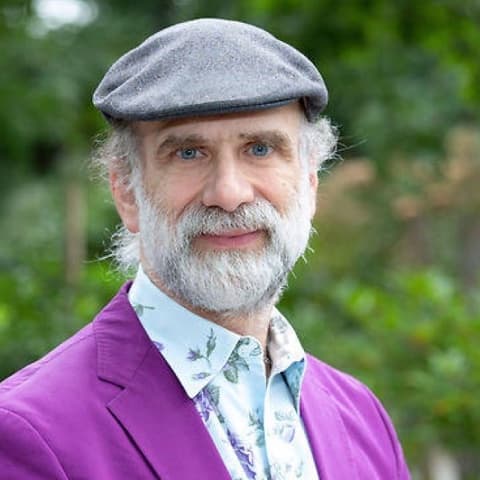
Bruce Schneier
Website ↗Security technologist
Leadership Team

Bob Blessing-Hartley
LinkedIn ↗CTO, Shielded Technology

Patrick Duffy
LinkedIn ↗CEO, Solv Labs

Cristin Flynn Goodwin
LinkedIn ↗Managing Partner, Advanced Cyber Law

Drummond Reed
LinkedIn ↗Director, First Person Cooperative

Mo Sadek
LinkedIn ↗
Ed Sewell
LinkedIn ↗Founder and Chair
Founding Contributors

Alice Albl
LinkedIn ↗Emergent Technology Researcher, Mueller Consulting

Abdelhamid Bakhta
LinkedIn ↗Head of Applied AI & Verifiable Intelligence

Tim Bansemer
LinkedIn ↗CEO inblock.io assets GmbH

Joe Braidwood
LinkedIn ↗Co-founder & CEO, Glacis Technologies, Inc.

David Campbell
LinkedIn ↗Head of AI Security, Scale AI

David Cass
LinkedIn ↗CISO and Enterprise Technology Leader, Harvard (HES) Faculty

Sharath Chandra
LinkedIn ↗Founder & Architect

Vinod Choyi
LinkedIn ↗Distinguished Engineer - Security Architect, Verizon
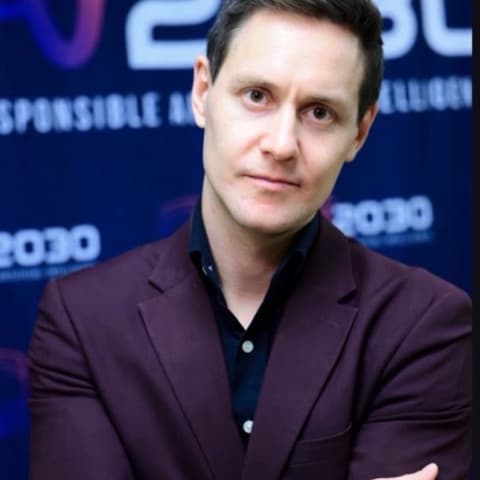
Ben Christensen
LinkedIn ↗Head of Partnerships, AI 2030 | Senior Fellow, AEGIXInstitute.org | VP Innovation and Impact, Cultural Infusion's Atlas | Advisor, Advanced AI Society | Fellow AIandFaith.org | Startup Mentor, Quay Acceleration | Steering Committee, IEEE Global AI Systems Flourishing Initiative
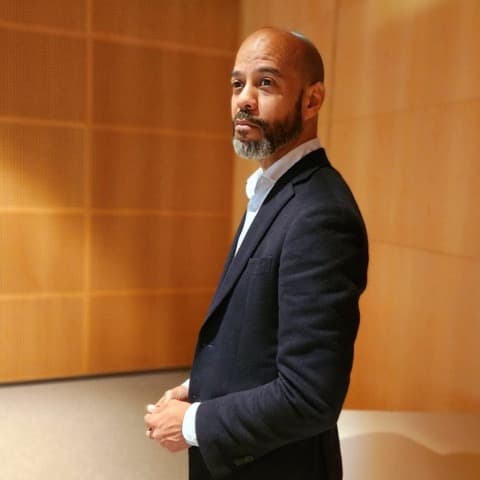
Eugene Coffie
LinkedIn ↗CEO & Founder of Predict AI
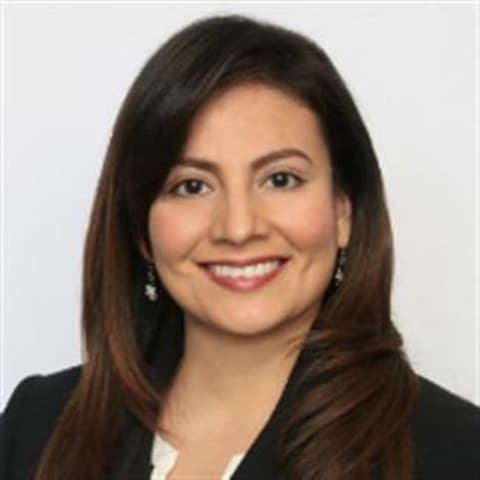
Crystal Coindreau
LinkedIn ↗A.V.P., Sr. Security Architect - AI

Rosalyn Curato
LinkedIn ↗Chief Innovation Officer & GM, Agentic Security
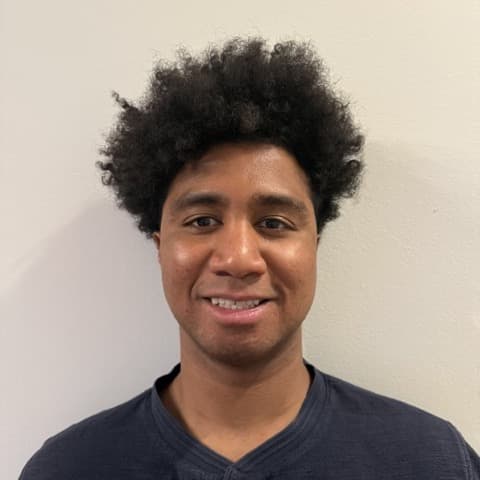
Danny Davis
Founder, Loqal

Andrew Davis
LinkedIn ↗Founder, Living Code

Brijesh Deo
LinkedIn ↗Director of Software Development

Fraser Edwards
LinkedIn ↗CEO, cheqd; Board member, Ayra

Craig Ellrod
LinkedIn ↗Founder, CEO of the HACKERverse®

David Goecke
LinkedIn ↗Founder, gotech.ai
Shiva Kumar Gosula
LinkedIn ↗Information Security Engineer, FinMkt
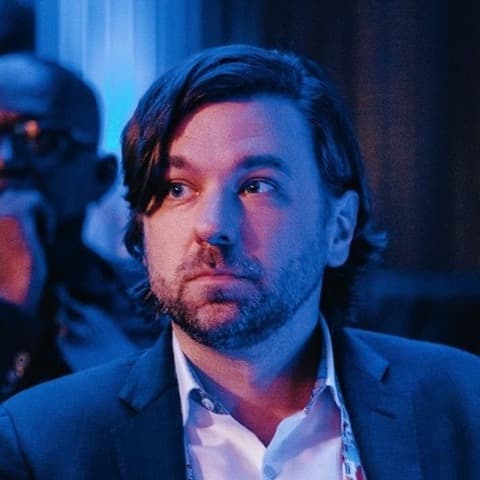
Matt Grasser
LinkedIn ↗CTO and Co-Founder, Digital Transformation Solutions

Dazza Greenwood
LinkedIn ↗Founder, CIVICS.com and Interlateral.com
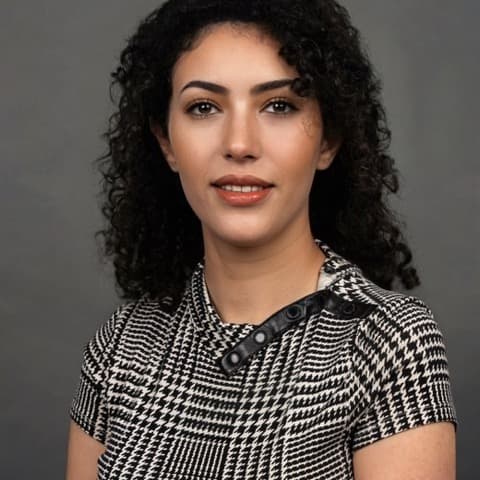
Nas Hajia
LinkedIn ↗Security Architecture, Lam Research

Dylan Hobbs
LinkedIn ↗Principal Founding Engineer, Vouched. KYA-OS Author, Decentralized Identity Foundation (DIF).

Sai Honig
LinkedIn ↗Responsible AI & CyberSecurity Leader | International Speaker on Security, AI Ethics & Women in Tech | Senior Security Consultant, Novera Consulting
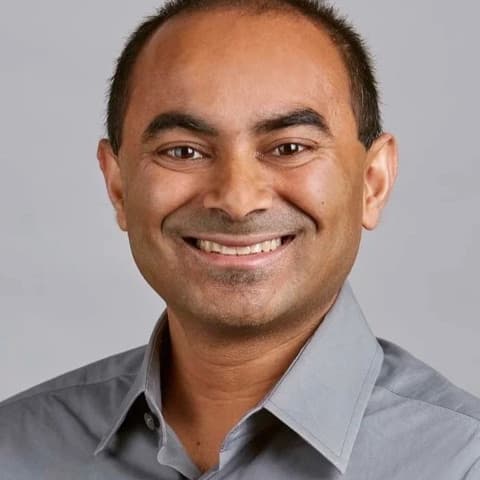
Ahmer Inam
LinkedIn ↗Founder and CEO, Cognisee PBC

John Jiang
LinkedIn ↗Cloud and Security Architect

JP
LinkedIn ↗CEO, Blue Cycle LLC

Rajesh Kanungo
LinkedIn ↗CEO of TalaSeure, Inc. CSA member

Ali Khan
LinkedIn ↗CEO, SHAPE, Visiting Professor

Mahesh Kukreja
LinkedIn ↗Security Engineer, Zipline International

Markus Lam
LinkedIn ↗Co-founder, Angainor BD @Axal, in-coming president,NYU blockchain labs

Chris Marzilli
LinkedIn ↗
Lain McNeill
LinkedIn ↗Founder, Hybrid Intelligent Systems Design & Integration (HISDI)
Mihaly
LinkedIn ↗Security Manager, Deutsche Telekom Security

Atsushi Mizushima
LinkedIn ↗Partner, Nishimura and Asahi

Dilip Mohapatra
LinkedIn ↗CEO
Rezza Moieni
LinkedIn ↗CTO and CyberSecurity Adjunct Lecturer

Paul Oakes
LinkedIn ↗
Pushpendra Pal
LinkedIn ↗CEO, DapplePot
Govindaraj Palanisamy
LinkedIn ↗Principal Architect, Global Payments

Satnam Purewal
LinkedIn ↗ISACA Puget Sound, Board Member, AI Safety WG (Cloud Security Alliance)
Arvind Raja
LinkedIn ↗Founder & CEO, Kurral

Marianna Richardson
LinkedIn ↗Director of Communication, G20 Interfaith Forum Assoc.

Kristian Ronn
CEO, Lucid Computing

Nelson Rosario
LinkedIn ↗Partner @ Rosario Tech Law | Board @ Illinois Blockchain Association | AI Steering Committee @ ISBA | Advisor @ Advanced AI Society

Andrew Rubinger
LinkedIn ↗Founder, withaileron.ai

Aman Sardana
LinkedIn ↗
Udbhav Saxena
LinkedIn ↗Software Intern at Vouched

Amy Steagall
LinkedIn ↗Stanford University Chief Information Security Officer
Mikayla Stewart
LinkedIn ↗Cofounder, Coldstart AI, Founder @ Atono, CTO & Cofounder @ Athena Collective
Dan Stocker
LinkedIn ↗Executive Director, AI Security, JPMorganChase

Nowa Sutaka
LinkedIn ↗CEO & Founder, Puddin AI

Ravi Tanguturi
LinkedIn ↗Chief AI Security Architect, Director - Solutions Engineering, PointGuardAI

Ramesh Thiagarajan
LinkedIn ↗Security Architect, Amazon
David Thomson
LinkedIn ↗Co-founder and Chief Ecosystem Architect

Yogesh Trivedi
LinkedIn ↗Founder and CEO, CognitivTrust

Julie Tsai
LinkedIn ↗Board Member, Bay Area CSO Council; CISO-in-Residence Ballistic Ventures; Founder Polaris Collective; Cyber Co-Lead AI Insiders; IANS Faculty
John V
LinkedIn ↗AI red team SME at the Institute of Security and Technology (NC3)
Samuel Vance-Law
Head of Research
Joshua Waldrep
LinkedIn ↗Founder, Pipelock (open-source agent firewall). Pipelab
Lindsay Walker
LinkedIn ↗Product Manager, Hedera AI Studio
Aydan Wang
LinkedIn ↗RNA Biology Researcher, University of Manitoba; Co-Founder, Angainor; Undergraduate Researcher, University of Pennsylvania

Caroline Wong
LinkedIn ↗Chief Strategy Officer, Axari; Author, The AI Cybersecurity Handbook (Wiley, 2026)
Seref Yarar
LinkedIn ↗Co-founder, Index Network
Join them
The standard is still being written. Contributors shape what goes into v2.0.
Become a founding contributor →(Google sign-in required)
How to Get Involved
Join the alliance
Join as an organizational member if you’re a founder and buyer of verifiable AI. Open to start-ups, enterprises, universities, and key players in the open verification ecosystem.
Join the open verification movement
Join as an individual. Free and open to any individual who wants to advance verifiable AI and open verification.
Join Proof-of-Control
If you’re a cybersecurity practitioner or CISO, we invite you to join as a Founding Contributor to Proof-of-Control.
Become a founding contributor →(Google sign-in required)
Join the Open Verification Lab
Contribute to or lead research, and build tools that advance Proof-of-Control and the larger open verification category.